Viasys/ShieldBox Cloud NVR Configuration
Overview
This guide covers the configuration of Viasys/ShieldBox Cloud NVR integration with GCXONE, leveraging cloud-based setup for simplified deployment.
What you'll accomplish:
- Access Viasys/ShieldBox cloud platform and configure NVR
- Setup network connectivity for cloud integration
- Add Viasys/ShieldBox Cloud NVR to GCXONE platform
- Configure cameras, events, and integration profile
- Verify successful integration and test all features
Estimated time: 25-35 minutes
Prerequisites
Ensure you have completed the prerequisites listed in the Overview:
- Viasys/ShieldBox Cloud NVR hardware or cloud account
- Admin access to Viasys/ShieldBox cloud platform
- Network connectivity with internet access
- GCXONE account with device configuration permissions
- Viasys/ShieldBox cloud account credentials
- Cameras configured in Viasys/ShieldBox platform
Configuration Workflow
The configuration process consists of 3 main parts:
- Viasys Cloud Setup - Access cloud platform, configure NVR and cameras (Steps 1-3)
- GCXONE Platform Setup - Add cloud NVR to GCXONE, configure integration (Steps 4-6)
- Verification - Test live streaming, playback, timeline, events
Part 1: Viasys/ShieldBox Cloud Setup
Step 1: Access Viasys/ShieldBox Cloud Platform
UI Path: Web Browser → https://cloud.viasys.com or https://shieldbox.cloud (example URLs)
Objective: Access Viasys/ShieldBox cloud platform to configure NVR.
Configuration Steps:
- Open web browser and navigate to Viasys/ShieldBox cloud portal
- Log in with your cloud account credentials:
- Email address
- Password
- Select Organization (if managing multiple organizations)
- Navigate to Devices or NVRs section
- Verify your Cloud NVR appears in the device list:
- NVR should show "Online" status
- Serial number matches physical device
- Click on the NVR to access configuration

Expected Result: Successfully logged into Viasys/ShieldBox cloud platform with NVR visible and online.
Step 2: Configure NVR Network and Cloud Settings
UI Path: Cloud Platform → NVR → Settings → Network
Objective: Configure NVR network settings for cloud integration.
Configuration Steps:
- In NVR device page, navigate to Settings → Network
- Configure Network Settings:
- Connection Type: DHCP or Static IP
- IP Address: Verify NVR has valid IP (if static)
- Gateway: Verify gateway is correct
- DNS Server: 8.8.8.8 or local DNS
- Configure Cloud Settings:
- Enable Cloud Service: ✓ Checked (should be enabled by default)
- Cloud Status: Verify shows "Connected"
- GCXONE Integration: ✓ Enable if available
- Configure Ports (if configurable):
- Verify HTTP/HTTPS ports for cloud communication
- Click Save to apply settings
- Verify Cloud Connection Status shows "Active" or "Connected"
Expected Result: NVR connected to Viasys cloud platform, network settings configured correctly.
Step 3: Verify Cameras and Configure Recording
UI Path: Cloud Platform → NVR → Cameras
Objective: Verify cameras are configured and recording in Viasys cloud platform.
Configuration Steps:
- Navigate to Cameras section in NVR device page
- Verify all cameras are listed and online:
- Camera names
- Connection status: "Online"
- Live stream preview available
- For each camera, verify Recording Settings:
- Recording Schedule: Continuous or Motion-based
- Recording Location: Cloud, Local, or Both
- Retention Period: Set according to requirements
- Configure Motion Detection (if not already enabled):
- Enable motion detection for cameras
- Set detection sensitivity
- Configure detection zones
- Verify Storage Status:
- Local storage (if available): Check disk space
- Cloud storage: Verify storage allocation
- Click Save to apply camera settings
Expected Result: All cameras online, recording enabled, motion detection configured.
Part 2: GCXONE Platform Setup
Step 4: Add Viasys/ShieldBox Cloud NVR in GCXONE
UI Path: GCXONE Web Portal → Devices → Add Device
Objective: Register Viasys/ShieldBox Cloud NVR in GCXONE platform.
Configuration Steps:
- Log into GCXONE web portal with admin credentials
- Navigate to Devices → Add Device
- Select device type:
- Type: Cloud NVR or Cloud VMS
- Manufacturer: Viasys or ShieldBox
- Enter cloud NVR details:
- Device Name: Descriptive name (e.g., "Site A - Viasys Cloud NVR")
- Cloud Account: Viasys/ShieldBox cloud account email
- Cloud Credentials: Password or API key
- NVR Serial Number: Serial number from Step 1
- Time Zone: Select appropriate time zone
- Alternatively, use Cloud Integration method:
- Cloud Platform: Viasys/ShieldBox
- Authorization: OAuth or API token (if available)
- Click Test Connection to verify cloud connectivity
- If successful, click Add Device to register in GCXONE
- GCXONE will discover all cameras from Viasys Cloud NVR via cloud API
Expected Result: Viasys/ShieldBox Cloud NVR successfully added and shows "Online" status in GCXONE with cameras discovered.
Step 5: Configure Integration Profile and Features
UI Path: GCXONE → Devices → Viasys Cloud NVR → Integration Settings
Objective: Select integration profile and enable desired features.
Configuration Steps:
- In GCXONE, navigate to newly added Viasys Cloud NVR device
- Click Integration Settings or Configuration
- Select Integration Profile:
- Basic Profile: Essential features (live streaming, playback, events)
- Basic+ Profile: Enhanced features (event management, notifications, IO control)
- Click Apply Profile (features are auto-configured based on profile)
- Review and customize Profile Features:
- Cloud Streaming: ✓ Enabled (auto-configured)
- Cloud Polling: ✓ Enabled (auto-configured)
- Genesis Audio (SIP): ✓ Enabled (auto-configured)
- PTZ Control: ✓ Enabled (if PTZ cameras present)
- IO Control: ✓ Enabled (if alarm inputs/outputs present)
- Timelapse: ○ Enable if required (partial support)
- Click Save Configuration
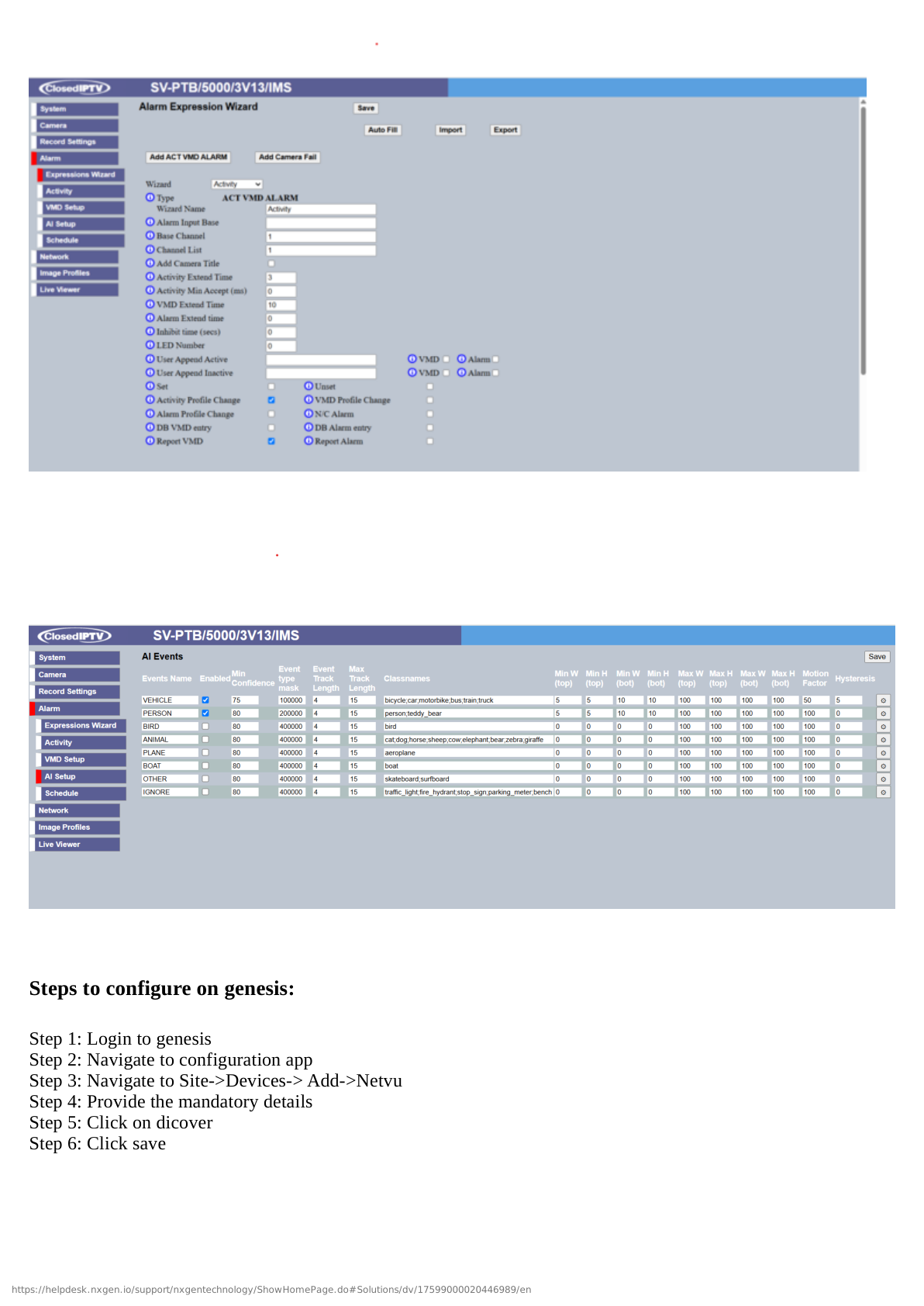
Expected Result: Integration profile applied, features auto-configured and enabled.
Step 6: Configure Cameras, Events, and Notifications
UI Path: GCXONE → Devices → Viasys Cloud NVR → Camera & Event Configuration
Objective: Configure camera mappings, event forwarding, and notification settings.
Configuration Steps:
- Navigate to Camera Configuration in GCXONE
- Review Auto-Discovered Cameras (synced from Viasys cloud)
- For each camera:
- Assign to site/location in hierarchy
- Verify Cloud Streaming enabled
- Verify Timeline enabled
- Configure Stream Quality: Auto (recommended)
- Navigate to Event Configuration
- Configure Event Forwarding:
- Motion Detection: ✓ Enabled
- Video Analytics: ✓ Enabled (if available)
- Camera Disconnection: ✓ Enabled
- System Events: ✓ Enabled
- Alarm Inputs: ✓ Enabled (if using physical alarms)
- Configure Notifications:
- Push Notifications: ✓ Enable for mobile alerts
- Email Notifications: ✓ Enable (enter email addresses)
- SMS Notifications: ✓ Enable if required
- Notification Schedule: 24/7 or custom
- Click Save Configuration
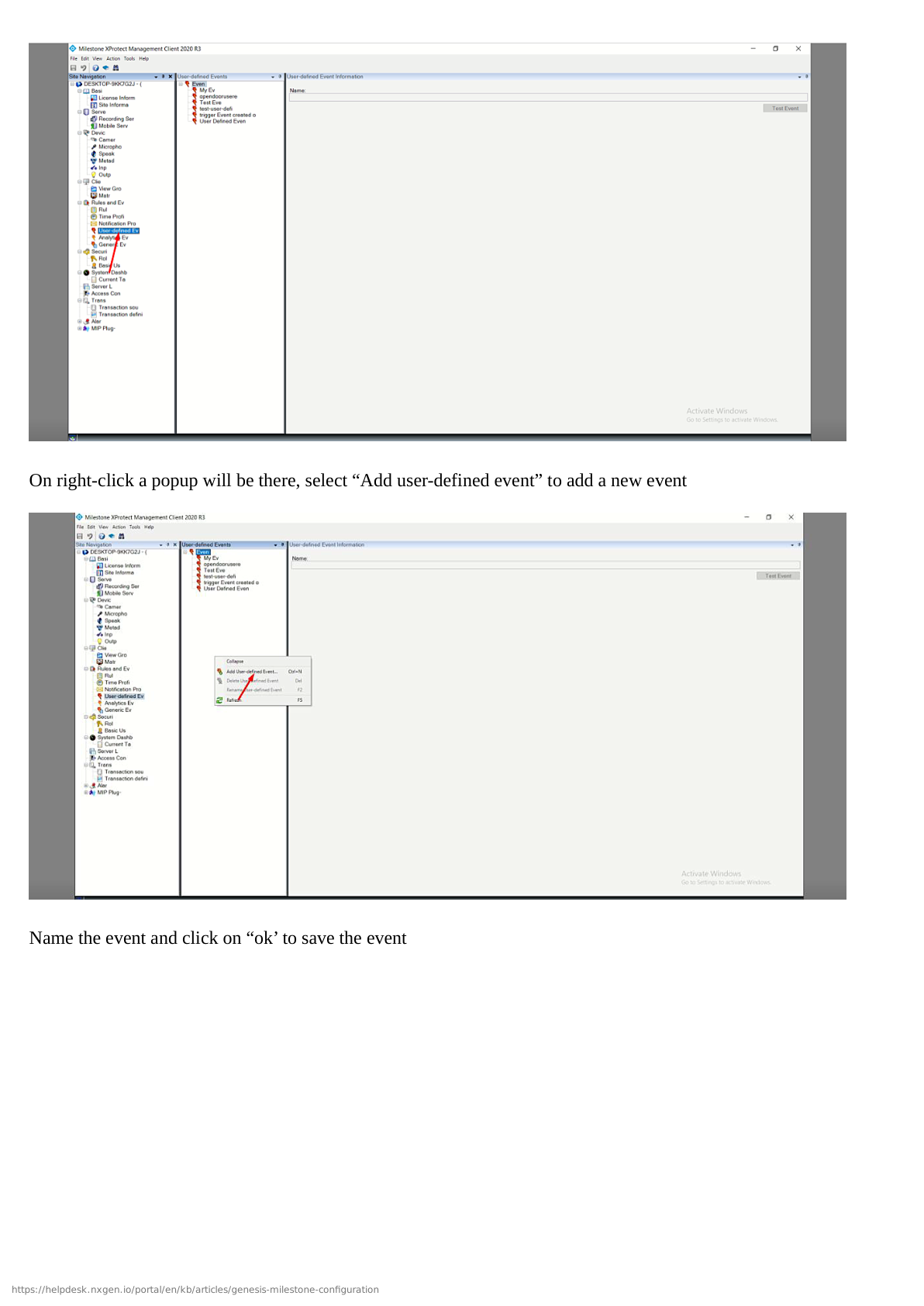
Expected Result: Cameras mapped, events forwarding, notifications configured.
Part 3: Verification and Testing
Verification Checklist
Live Streaming:
- Cloud live streaming works for all cameras
- Stream quality acceptable with minimal latency
- Multiple concurrent streams work
- Audio works (if cameras support audio)
Playback and Timeline:
- Cloud playback works with timeline navigation
- Timeline shows event markers correctly
- Can jump to specific events on timeline
- Playback speed controls work
- Video export/clip download works
Events:
- Motion detection events forwarded to GCXONE
- Event notifications sent correctly (push, email, SMS)
- Event video clips accessible
- Arm/Disarm functions work
- System events properly reported
PTZ Control (if applicable):
- Cloud PTZ controls work (pan, tilt, zoom)
- PTZ presets can be saved and recalled
General:
- Device status shows "Online" in GCXONE
- Mobile app access works
- No error messages in device logs
- Cloud polling status active
Advanced Configuration
IO Integration (Basic+ Profile)
For NVRs with physical alarm inputs/outputs:
- Navigate to IO Configuration in GCXONE
- Map alarm inputs to GCXONE events:
- Assign descriptive names to each input
- Configure input trigger type (NC/NO)
- Configure alarm output actions:
- Link outputs to GCXONE automation rules
- Set output duration and behavior
- Test alarm triggers and verify events in GCXONE
Multi-Site Deployment
For managing multiple Viasys/ShieldBox Cloud NVRs:
- Add each Cloud NVR separately in GCXONE
- Use cloud account credentials for each site
- Organize NVRs by site hierarchy in GCXONE
- Configure site-specific integration profiles
- Set up cross-site automation rules if needed
Troubleshooting
See the Troubleshooting Guide for common problems and solutions.
Quick troubleshooting:
- NVR not discovered: Verify cloud account credentials and NVR is online in Viasys platform
- Connection fails: Check cloud service enabled in Viasys platform, verify API access
- No video: Verify cameras online in Viasys cloud platform
- Poor video quality: Check network bandwidth between NVR and cloud
- No events: Verify motion detection enabled in Viasys platform and GCXONE
- Cloud streaming fails: Check NVR has internet connectivity and cloud status is "Connected"
Related Articles
- Viasys/ShieldBox Cloud NVR Overview
- Viasys/ShieldBox Cloud NVR Troubleshooting
Need Help?
If you need assistance with Viasys/ShieldBox Cloud NVR configuration, contact support.